A Five Good Emperors · Special Report
Alberta Is Running Out of Power.
Issue No. 01 · April 2026
Navigate · J K
Special Report · Alberta Energy Issue No. 01 · 2026
Urgent · For Alberta Homeowners

Alberta Is
Running Out of
Power.

A tsunami of demand is crashing into the grid — and your electricity bill is the shore.

Scroll

The Headline

Your power bill is about to change — fast.

Three numbers that should not be on the same grid in the same decade. Together, they explain what every Alberta household is about to feel.

Data centre load queued
0GW

Nearly the entire Alberta grid's capacity — requested by AI companies alone.

Data centre applications rejected
0%

37 of 39 proposals denied. The grid literally cannot absorb what is knocking on the door.

Price cap year
2020

Wholesale cap rises to $1,500/MWh mid-2027, then $2,000/MWh by 2032.

The wave has already begun to build. By the time it breaks, the people who prepared will be the ones still standing.
— The signal in the AESO filings, translated into plain English
Part I · The Tsunami

A wave the grid was never built for.

21 gigawatts of AI load applied to connect to a 23 GW system. This is what that looks like from street level.

The Anatomy of the Wave

A wave of demand the grid was never built for.

Alberta's entire grid holds roughly 23 gigawatts. A single sector — AI data centres — asked for 21 more.

Electrical tsunami towering over a city — conceptual illustration
A tsunami of demand towering over Alberta — illustration of the AESO connection queue

Load vs. capacity (GW)

Peak demand · Dec 2025
12.8GW
Entire grid capacity
23GW
Data centre ask
21GW
0% Rejected

Data centre connection queue · AESO

Thirty-seven of thirty-nine proposals — turned away.

94.2% rejected · 19.8 GW of load refused
5.8% allocated · 1.2 GW to just 2 projects

Even so, the two approved projects will add load equivalent to a small city. The first wave has already hit.

The rejected 94% haven't gone home — they're lobbying, relocating, or waiting for the next AESO window. The pressure doesn't recede. It builds.

Part II · The Timeline

The next four years decide the next forty.

Policy dates don't feel urgent until you line them up. Then the shape of the wave becomes impossible to miss.

Dec 31, 2026

Rate of Last Resort expires.

The ~12¢/kWh safety valve that caps household electricity prices disappears. After this date, rates reset with no ceiling in place.

Mid-2027

Restructured Energy Market (REM) goes live.

AESO replaces the current market. Wholesale price cap jumps to $1,500/MWh — a 50% uplift in maximum hourly prices.

2028–2032

First data-centre build-outs energize.

The 1.2 GW of allocated AI load comes online, adding ~5% to total system demand overnight. Transmission upgrades accelerate, paid through your delivery charge.

2032

REM price cap rises to $2,000/MWh.

Second uplift. Peak-hour exposure for any household still on variable rates doubles vs. 2025 ceilings.

2038

Transmission charge trajectory locked in.

AESO's 2025 TRO forecasts residential transmission charges +60% by 2045. By 2038 we're halfway up the staircase — and it is not coming back down.

Part III · Your Bill

You're not paying for electricity. You're paying to deliver it.

The wholesale cost of power fell to an 8-year low in 2025. Your bill didn't. Here's why: the energy itself is now the smallest piece.

0%
Of your bill is delivery

Anatomy of an Alberta power bill

The delivery charge is the runaway piece.

Energy cost (what you actually used)27%
Delivery — transmission + distribution41%
Local access fees17%
Riders, admin, tax15%
The wholesale pool price hit an 8-year low in 2025 — and rates still climbed. That's because 73% of your bill has nothing to do with cheap electrons. It tracks the cost of wires, substations, and upgrades — and those are about to scale up to carry data-centre load.
Chart: projected climb in residential transmission charges through 2045
AESO's 2025 Transmission Rate Outlook — residential charges forecast to climb +60% by 2045.

Part IV · The Math

The gap between two futures — drawn to scale.

Every household in Alberta is now choosing between two 25-year cost curves. One climbs. The other doesn't. This is how far apart they get.

2026 2031 2036 2041 2046 2051 $0 $30K $60K $90K $120K YEAR 11 · PAYOFF $115K grid $33K solar
25-yr grid cost @ +5%/yr
Solar install + maintenance
Break-even point

The gap

$82,000 saved. 13× wider by 2050.

Based on a typical $200/month bill, a $30K install, $100/yr maintenance, and a conservative 5% annual grid-cost increase. Most AESO scenarios run hotter than that.

Interlude · Your Number

The $82,000 is an average. What's yours?

Move the slider to your real monthly bill. The chart redraws your personal 25-year trajectory — and the gap solar opens up for your specific household.

Yr 1 Yr 6 Yr 11 Yr 16 Yr 21 Yr 25
25-yr grid cost
$118K
Your savings
$85K
Payoff year
Year 11
Lock in my number → Book an assessment

Part V · The Divide

Someone pays for the tsunami. It is not going to be the data centres.

The economics of the next decade cleave Alberta into two groups. One writes the cheque. The other cashes it.

Who profits

Capital positioned upstream.

  • AI developers — locking in fixed energy contracts before REM takes effect.
  • Generators — selling into a higher price cap with less competition after RoLR expires.
  • Transmission utilities — rate base expands every year to carry new load.
  • Gas producers — data-centre-grade baseload demand becomes a 25-year annuity.
  • Export brokers — Montana and BC interties monetize Alberta's surplus hours.

Who pays

The household with nowhere else to go.

  • Homeowners on the Rate of Last Resort — after Dec 2026, no cap.
  • Renters — landlords pass delivery hikes through in rent adjustments.
  • Small business — flat-rate plans already repricing into REM's curve.
  • Fixed-income seniors — winter peaks now represent 1–2% of annual income.
  • Rural customers — longest delivery lines absorb the steepest transmission climb.
01

The Demand Wave

21 GW of AI load queued against a 23 GW grid. Capacity is the choke point — and capacity gets expensive to add.

02

The Policy Cliff

RoLR expires 2026. REM launches 2027. Two structural shifts landing in 13 months.

03

The Delivery Climb

+60% transmission by 2045. The cost lives in the wires, not the electrons — and wires are locked in.

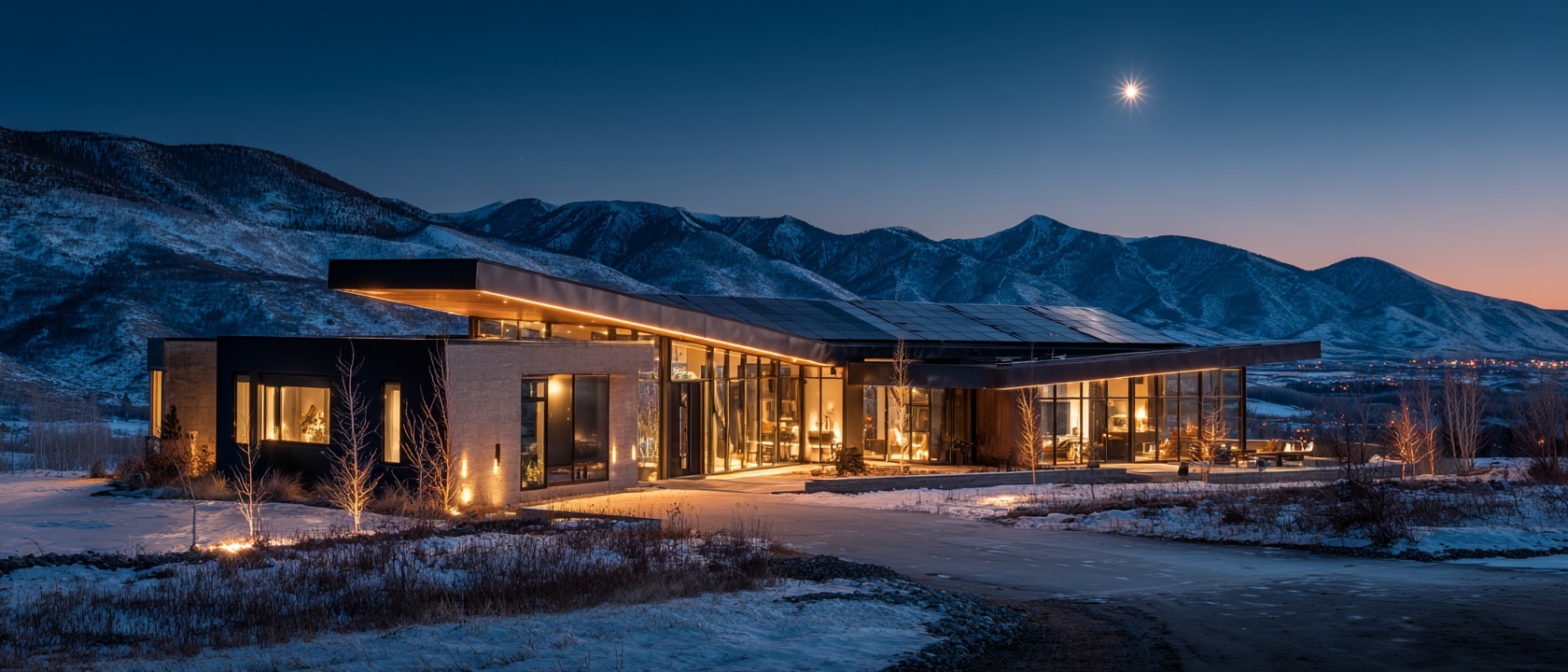
Canadian solar-equipped home inside a glowing protective shield
Part VI · The Response

There is a place the wave doesn't reach.

Every kilowatt-hour you generate on your own roof is a kilowatt-hour that doesn't touch the delivery charge, the price cap, or the rate-base climb.

The Math of Immunity

Step out of the current.

Solar doesn't make the tsunami smaller. It makes you a spectator instead of a swimmer.

Canadian solar home inside a glowing protective shield

A 25-year insulation policy with a return attached.

Every kilowatt-hour you generate on your own roof is a kilowatt-hour that doesn't touch the delivery charge, the REM price cap, or the utility's rate-base pass-through. It is the one line item on the bill you control.

What happens whenGrid-reliant homeSolar-equipped home
RoLR expires (2026)Exposed to resetLocked at panel
REM cap rises to $2K/MWhFull peak exposureSelf-supplied midday
Transmission +60% by 2045Pays the climbPays less of it
Demand doubles by 2050Rate base expandsGenerates into it
Winter peak outagesLoad-shed candidateBattery-backed island
The quiet math: every 1% the grid bill climbs, solar's advantage compounds the same amount. You aren't betting rates will rise. You're insuring against the already-filed trajectory that says they will.
The Last Word

Get to higher ground.

A residential solar assessment takes thirty minutes and tells you exactly where the $82,000 curve starts for your roof, your usage, your orientation. The wave is coming either way. The question is whether you watch it from the beach or from the cliff.

Book my free assessment